

Table of Contents
- Why Surfers Wax a Surfboard
- How Beeswax Creates Grip and Traction
- Surf Wax Ingredients: Beeswax vs Conventional Wax
- How to Apply Beeswax Surf Wax to Your Board
- How Long Does Natural Beeswax Surf Wax Last
- How to Remove Surf Wax From Your Surfboard
- Environmental Impact and Marine Safety
- Beeswax Surf Wax for Different Water Temperatures
- Frequently Asked Questions
Last Updated: October 19, 2026
Why Surfers Wax a Surfboard
Surfboard wax exists for one reason: grip. Without it, your feet slip on wet fiberglass, uncomfortable and dangerous. Wax creates friction between your feet and the board, keeping you planted during takeoffs, turns, and maneuvers.
The wax layer also provides traction during paddling, helping you maintain contact with the surface, and that same grip controls the board through sharp cuts and aerial tricks.
Different formulas create different textures, fine crystalline bumps or larger, stickier beads, depending on composition, temperature, and exposure to sun and saltwater. Natural beeswax surf wax creates a distinctive grain.
How Beeswax Creates Grip and Traction
Beeswax creates grip through surface texture and material behavior combined, not a single magic property.

1. Crystalline surface texture. When beeswax cools and sets, it forms tiny crystalline structures. Applied in circular motions, these crystals create microscopic peaks and valleys; your foot or wetsuit presses into them, and the mechanical interlock stops you sliding. The texture is finer than many paraffin waxes.
2. Controlled tack (adhesion). Beeswax alone is hard and not especially sticky, so formulators blend it with softer plant oils like coconut oil to raise surface tack. The goal: slightly sticky to the touch without smearing onto your wetsuit. That balance is why natural beeswax surf wax is sold in temperature-specific blends rather than one universal bar.
3. Thermal behavior. Beeswax melts at roughly 60-65°C (140-150°F), so a beeswax bar stays firmer in cool water and resists turning into a slippery film. In warm water it softens predictably.
4. Water and salt interaction. Saltwater doesn't dissolve beeswax but does affect surface feel: salt crystals and water dull the texture over a session, which is why surfers 'rough up' the wax with a comb or fresh application. Beeswax holds texture longer than softer waxes in cold water but smooths out faster in warm.
5. The friction trade-off. More grip isn't always better: a thick, heavily textured layer feels grabby and slow underfoot and can chafe bare skin. Experienced surfers apply a thinner, even coat and rely on the crystalline structure rather than thickness. Beeswax rewards this because its texture is naturally fine-grained.
Surf Wax Ingredients: Beeswax vs Conventional Wax
Most conventional surf wax is based on paraffin, a cheap petroleum byproduct that performs well across many conditions and dominates the mass market. But paraffin is non-renewable and leaves a chemical residue on your board and in the ocean.
Natural beeswax surf wax replaces paraffin with organic beeswax, blended with plant-based oils like coconut oil, tree resin, and other natural hardeners to adjust melting point and texture without synthetic additives.
The performance difference matters for cold-water surfing. Beeswax formulas designed for cool water (like Surfgoo's cool water wax, optimized for 58°F to 68°F conditions) maintain their grip without becoming brittle. Conventional paraffin wax in the same temperature range can crack or harden too much, reducing traction.
Plant-based ingredients also biodegrade faster: beeswax and coconut oil break down naturally when they wash into the ocean, while paraffin persists much longer, accumulating in sediment and potentially affecting marine life.
| Ingredient | Source | Performance in Cold Water | Environmental Impact |
|---|---|---|---|
| Beeswax | Honeybee hives | Maintains grip, hardens predictably | Biodegradable, renewable |
| Paraffin | Petroleum refining | Can crack or become too hard | Slow to degrade, non-renewable |
| Coconut oil | Coconut palms | Adds softness, reduces brittleness | Fully biodegradable |
| Tree resin | Pine or other trees | Increases hardness, extends durability | Biodegradable |
How to Apply Beeswax Surf Wax to Your Board
Applying beeswax surf wax takes practice but is straightforward. Start with a clean board, old residue interferes with new wax, then follow a two-layer approach: base coat, then top coat.
For the base coat, use firm, circular motions with the bar at a slight angle, pressing hard enough to deposit wax bumps across the area where your feet sit, from the center toward both rails. Don't worry about perfect coverage; the top coat refines it.
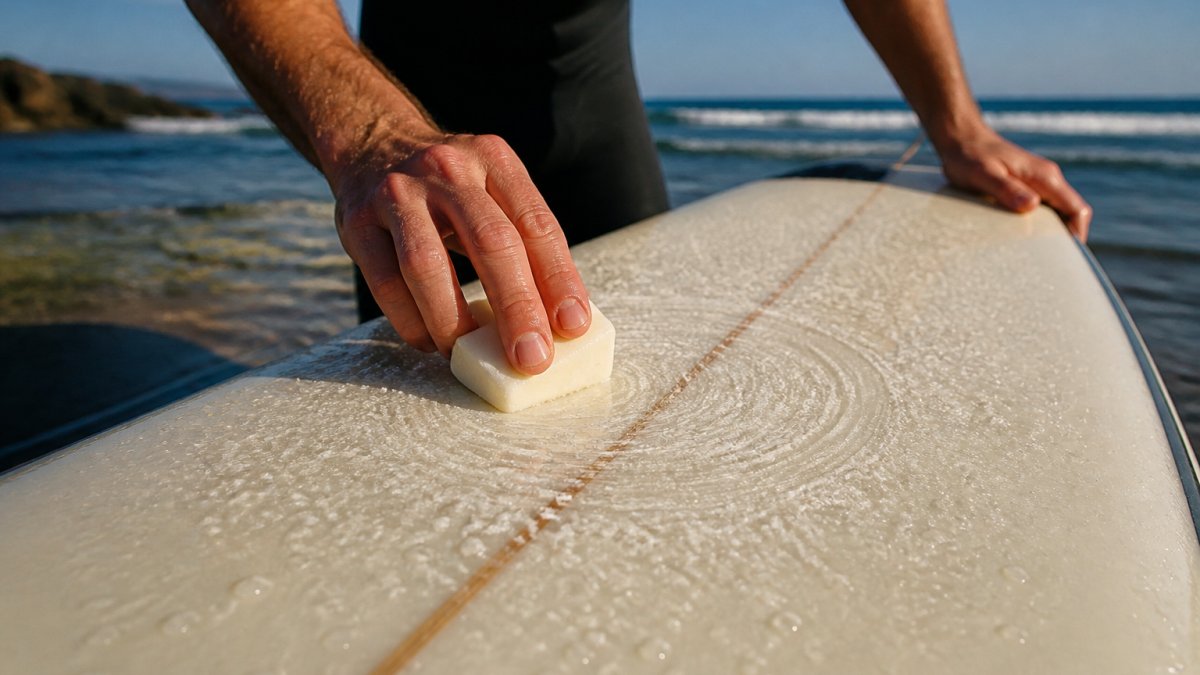
Once the base coat is set, apply the top coat with lighter pressure and smaller, tighter circles for finer, more responsive bumps. This is where you adjust texture to preference, a fine, almost sandy feel or larger, more pronounced bumps.
Temperature affects set time: beeswax hardens faster and feels tackier immediately in warm conditions, but takes longer to firm up in cold weather, give it extra time before a cold-water session.
How Long Does Natural Beeswax Surf Wax Last
There's no single lifespan for a beeswax surf wax application, durability depends on water temperature, session length, board storage, and application thickness. What follows is a practical framework, not a fixed number.
Typical wear patterns. A single bar lasts several weeks of regular surfing, but the wax on the board degrades faster. In cool water, a beeswax blend holds usable texture for roughly 6-10 sessions; in warm water, softer blends may need a top-up every 3-5 sessions as the wax smooths out.
What accelerates wear.
- Warm water and sun. Heat softens the wax and flattens texture. A board left in direct sun can lose its surface texture in a single afternoon.
- Sand and grit. Sand embeds in soft wax and acts like sandpaper on the texture, dulling it quickly.
- Wetsuit friction. The constant rubbing of a wetsuit during paddling wears down the peaks, especially in the standing area.
- Improper storage. Boards stored in hot cars or sheds degrade faster than boards kept in shade.
Signs it is time to refresh. The wax looks smooth and shiny rather than grainy, your feet feel like they are sliding during takeoff, or water beads on the surface instead of sitting in the texture.
How natural beeswax compares with conventional wax. Beeswax blends hold texture longer in cool water because they stay firmer, but can wear faster in warm water than hard paraffin.
Board care and removal. Natural wax softens with mild heat, so scraping in shade after a few minutes in gentle sun is usually enough. Avoid heat guns and direct hot sun, which can damage the board's resin. A plastic scraper or wax comb suffices; metal tools scratch fiberglass. A thin residue after scraping is fine, it helps new wax bond.
Reapplication rhythm. Apply a base coat at the start of a season and refresh the top layer every few sessions. Keep a spare bar in your bag and check texture before paddling out, if the board feels slick on land, it will feel worse in the water.
How to Remove Surf Wax From Your Surfboard
Removing old wax is necessary when buildup becomes excessive or you want to switch wax types. The most common method is scraping with a plastic wax comb or specialized removal tool, never metal, which scratches fiberglass. Scrape at a shallow angle, letting the tool glide under the wax bumps.
For stubborn buildup, warm the board slightly in the sun. Beeswax softens with heat, making it easier to scrape. Avoid extreme heat, which can damage the board's resin. A few minutes in mild sunlight is usually enough.
Some surfers use a heat gun at low setting, but too much heat damages the board; scraping in warm conditions and letting natural sun do the work is safer.
After scraping, your board won't be completely clean. A thin wax residue remains, which is actually helpful, it gives your new wax something to grip onto. Complete removal isn't necessary and can be harder on the board's surface.
Environmental Impact and Marine Safety
Beeswax surf wax is a significant shift away from petroleum-based waxes. Renewable and biodegradable, it has a lower environmental footprint throughout its lifecycle: honeybees produce it without synthetic processing, and when it washes into the ocean, natural bacteria break it down over weeks rather than months or years.
Conventional paraffin wax, derived from crude oil refining, accumulates in marine sediment. Individual contributions are small, but the cumulative impact across millions of surfers adds up, beeswax and plant-based blends reduce that burden significantly.
Marine organisms can ingest wax particles: beeswax breaks down into harmless compounds relatively quickly, while paraffin persists longer in the food chain, making beeswax the more ocean-conscious choice.
Sourcing matters too. Ethically harvested beeswax comes from beekeepers who prioritize hive health. Some beeswax is a byproduct of honey production, making it a genuinely renewable resource. At Surfgoo, we source organic beeswax from suppliers committed to sustainable beekeeping practices.
Beeswax Surf Wax for Different Water Temperatures
Water temperature is the primary factor determining which wax formula you need: cold water demands harder wax that resists melting into a slippery film, warm water needs softer wax that stays tacky without becoming gummy.
Beeswax formulas adjust across temperature ranges. A beeswax blend designed for cool water (like Surfgoo's cool water formula optimized for 58°F to 68°F) hardens just enough to maintain texture without becoming brittle. The same blend in warm water (above 70°F) will soften, but not as dramatically as paraffin wax would.
For cold-water surfers in northern regions or winter conditions, beeswax stays firm longer.
Warm-water beeswax formulas include softer plant-based oils like coconut oil to lower the melting point and keep the wax responsive in tropical conditions.
Many surfers keep multiple bars on hand, switching seasonally: a beeswax base coat applied in autumn works through winter, and switching to a warm-water formula as spring warms the water prevents buildup of overly soft wax that loses grip.
The choice to use natural beeswax surf wax comes down to performance, health, and ocean stewardship. You're not sacrificing grip or durability, beeswax delivers both while keeping harmful chemicals out of the water you love. Research on marine microplastics and wax accumulation shows that reducing petroleum-based products in coastal environments matters. Switching to beeswax is a concrete way to align your surfing with your values. Try Surfgoo's premium handcrafted wax formulas and experience the difference that sustainable, thoughtfully made wax can make in your sessions.
Frequently Asked Questions
How long does natural beeswax surf wax last compared to conventional wax?
Natural beeswax surf wax typically lasts depending on water temperature and session intensity. Cold-water formulas like Surfgoo's Cool Wax maintain tackiness through extended sessions, though you'll eventually need to add fresh bumps or reapply entirely after several weeks of regular use.
Does beeswax surf wax work well in cold water?
Yes, beeswax performs excellently in cold water when formulated specifically for those conditions. Temperature-optimized beeswax blends remain tacky and grippy in cold water. Surfgoo's Cool Wax is designed for water temperatures between 58°F and 68°F (14°C to 20°C), providing superior grip exactly when you need it most in chilly ocean conditions.
What makes natural beeswax surf wax better for the environment?
Natural beeswax is biodegradable and non-toxic, unlike petroleum-based paraffin wax, which breaks down slowly and can harm marine life. Beeswax dissolves harmlessly in ocean water and doesn't accumulate as microplastics. Additionally, sustainably sourced beeswax supports ethical beekeeping practices. Choosing natural ingredients means your surfing doesn't contribute to petrochemical pollution or microplastic accumulation in the marine ecosystems you love.
How do I know if beeswax surf wax will perform as well as the wax I'm already using?
Performance depends on proper formulation and water-temperature matching. Surfgoo's handcrafted formulas are tested for durability and traction across different temperatures. Matching the right product to your water temperature is key.

